News and insights
Latest
Featured
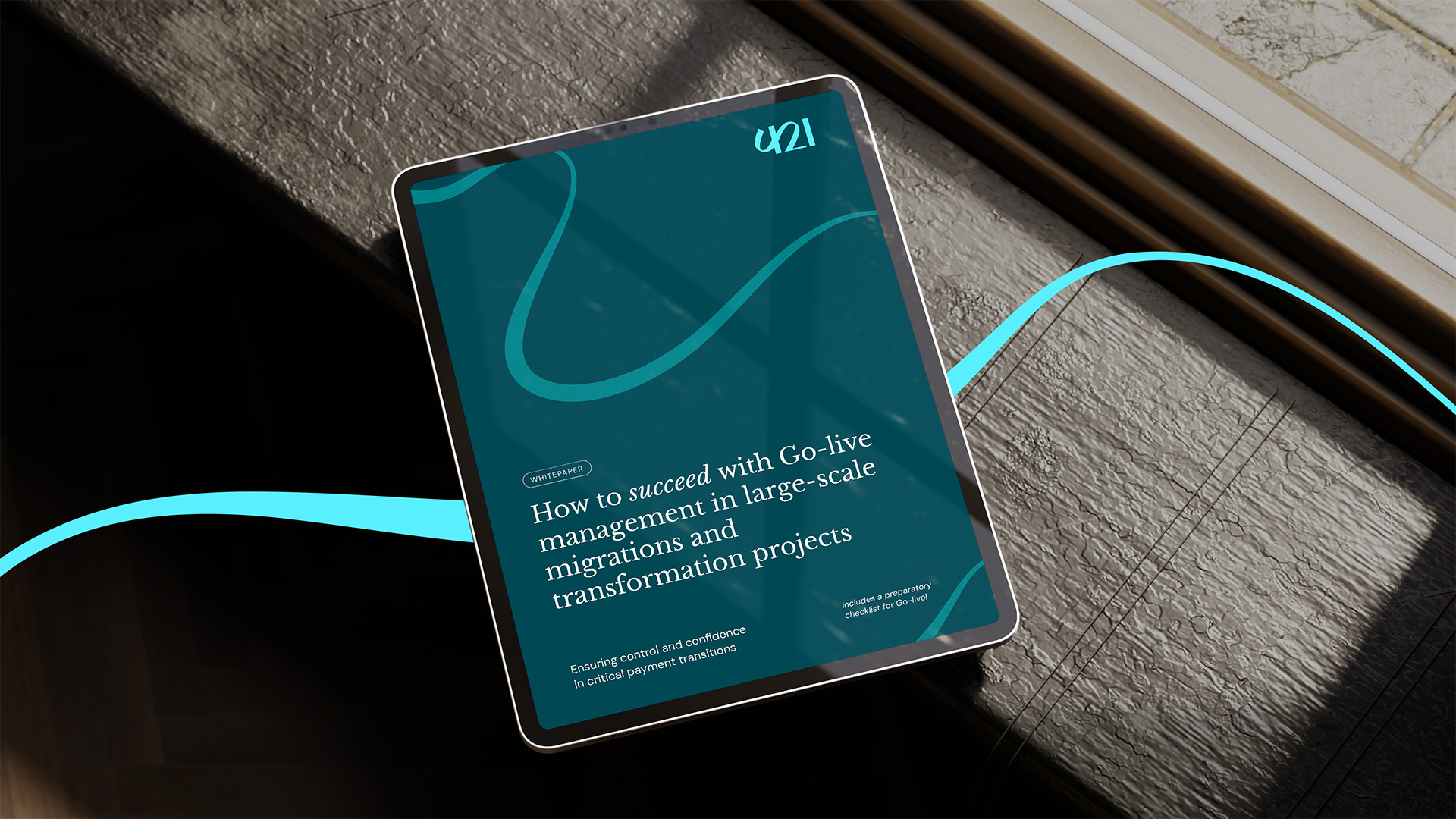
Whitepaper: How to succeed with Go-live management
In large-scale migrations and transformation projects, even short disruptions can lead to financial loss, reputational damage, and regulatory consequences for banks. Therefore, the Go-live moment – when the new system replaces the old one – represents a business-critical event. Download our whitepaper to gain practical guidance on planning and executing a controlled go-live for largescale migration and transformation programs.



On the Payment Horizon in 2025
We sat down with our Managing Partner Richard Lindblom and Partner Niclas Lindblom to discuss the key developments shaping the payments industry in 2025. Here’s what we’ve gathered.

RIX INST: The Next Step in the Evolution of Instant Payments
The Swedish central bank, Sveriges Riksbank, opened their RIX INST system in November 2024 to support additional instant payments beyond Swish. In short, RIX INST (Real-time Interbank Settlement) is a modernization of Sweden’s payment system which enables real-time transfers between financial institutions utilizing the ISO 20022 messaging standard. All participating banks have been working hard on this project for years, a few of them with help from 421. We sat down with Niclas Lindblom, Senior Manager at 421 and RIX INST expert, to explore several potential product ideas and business cases that could emerge from this groundbreaking technology.

Permission Dashboards – possibilities and challenges with expert Peter Carlstedt at Open Payments
Permission Dashboards is set to give banking customers more control over their financial data and which third-party providers have access to it. This article provides an overview of Permission Dashboards, and insights from an industry expert.


Navigating PSD3, PSR, and FIDA
The introduction of PSD3, PSR, and FIDA marks a new era for the European Payments market. The new payment service package aims to strengthen consumer protection, foster innovation, and improve the competitiveness of banking services. This white paper explores the main features, what it means for the financial sector, and the necessary steps for a successful transition and compliance

Will Today’s Digital Settlement Solutions Endure During a Crisis?
In an increasingly interconnected world, we depend on digital systems operating 24/7, which aligns with customer expectations on the market as well. Payments are made with a tap of a card or phone, while merchants rely on card terminals and internet connections to process transactions. But what happens when the system fails? Imagine a scenario where power outages or cyberattacks disrupt electricity grids and sever internet connections. Society is suddenly “off-grid,” and the conveniences of digital payments vanish. How do we ensure stability in such crises?

From P27 to Bankgirot’s transformation – What have we learned since the last time?
The Nordic banking sector has faced significant challenges in modernizing its payment infrastructure in recent years, most notably with the terminated P27 project. Now, Bankgirot has initiated a national-level transformation of the Swedish payment infrastructure. In this article, Mikael Hjorth, Partner at 421, shares his insights from P27 and how he guides a Swedish bank in their transformation journey.

Key findings from the EBA day 2024
Earlier this week, Niclas Lindblom and Cecilia Guthreus participated at the EBAday in Lisbon, Portugal. It is an annual summit for bankers and stakeholders within payments and transactions, as well as representatives from the regulators. In this short interview, Niclas and Cecilia share their insights from the two-day conference.

Clearing in Crisis Situations
The payment market infrastructure is the backbone of the local, regional, and global trade markets. It facilitates the clearing, settlement, and payment processing, which are fundamental to a well-functioning society. However, what happens during a disruption, and what contingency options are available?